
Cooperative Safety Control of Multiagent Systems: A Fully Actuated System Approach

姜斌 教授
南京航空航天大学,中国
摘要
In recent years, with the growing complexity of multi-agent systems, such systems have become increasingly vulnerable to various disturbances and faults during operation, which directly threaten the stability and safety of the entire system. Consequently, the demand for high-security multi-agent systems has become ever more urgent, drawing significant research attention from scholars worldwide on anti-disturbance and fault-tolerant control. This report aims to present the research achievements of multi-agent systems in three aspects based on the fully actuated system approach: anti-disturbance control, fault-tolerant control, and fault-tolerant game control, so as to ensure the safe and reliable operation of such systems.
In the anti-disturbance control module, targeting typical scenarios such as UAV swarms, multi-spacecraft systems, and tilt-rotor helicopters, we propose anti-disturbance methods under the fully actuated framework, including distributed event-triggered control and discrete-time fractional-order sliding mode control integrated with disturbance observers. These approaches can effectively suppress external disturbances and guarantee precise tracking and stable coordination of the system in complex environments.
In the fault-tolerant control module, for UAVs, unmanned helicopters, air-ground cooperative heterogeneous systems and other platforms, we develop fault-tolerant control methods based on adaptive algorithms, prescribed-time control, hierarchical design, incremental fully actuated models and other theories. These methods realize rapid fault estimation and compensation, enabling these systems to achieve robust recovery and sustained coordination even under faulty conditions.
Furthermore, fault-tolerant game control methods based on differential games and Stackelberg games are proposed, which strike a balance between fault tolerance and optimal formation performance, ensuring the simultaneous achievement of stability and optimal performance for multi-agent systems.
个人简介
姜斌教授于东北大学自控系获博士学位,曾先后在新加坡、法国、美国、加拿大做博士后、研究员、特邀教授和访问教授。他现为南京航空航天大学校长,教育部“长江学者”特聘教授。他已出版专著8部,并在国际期刊上发表论文200余篇。研究领域包括智能故障诊断、容错控制及其在飞行器、高铁上的应用。以第一完成人获国家自然科学二等奖,江苏省科学技术一等奖,教育部自然科学一等奖,中国航空学会“李明英才奖”,“冯如”航空科技精英奖等奖励。目前是IEEE Fellow、中国自动化学会(CAA)会士、IEEE南京分部控制系统分会主席、“直升机动力学”全国重点实验室主任,中国自动化学会人工智能与机器人教育专委会主任、中国人工智能学会系统故障诊断与健康管理专委会(筹)主任、中国航空学会制导、导航与控制分会副主任、以及IFAC技术过程故障检测、监督和安全性专业委员会成员。担任International Journal of Control, Automation and Systems资深编辑,以及IEEE Transactions on Cybernetics, IEEE Transactions on Neural Networks and Learning Systems, IEEE Transactions on Industrial Informatics等国际期刊的编委会成员。
Collaborative Control for Multi-Agent Systems: Analysis and Design
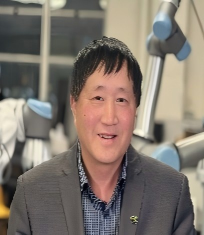
Peng Shi 教授
阿德莱德大学,澳大利亚
摘要
Multi-agent systems (MAS) have emerged as a key paradigm for orchestrating large-scale, networked systems, with applications spanning autonomous mobility, robotic swarms, and smart infrastructures. A fundamental challenge in these systems is collaborative decision-making—how agents, operating with partial information and limited communication, can collectively achieve coherent, efficient, and reliable global behaviour. This talk reviews recent advances in distributed decision-making frameworks, including consensus protocols, cooperative control, and distributed optimization. Particular attention is given to mechanisms that ensure scalability and robustness in the face of uncertainties, communication constraints, and dynamic environments. The growing synergy between model-based control and data-driven approaches—such as learning-enabled control and graph-based representations—will be highlighted as a pathway to enhanced adaptability and performance. The talk further examines critical issues in resilience and trustworthiness, including robustness against cyber-attacks, fault tolerance, and privacy-preserving coordination. Illustrative examples from autonomous and cyber-physical systems will demonstrate the practical relevance and impact of these developments.
个人简介
Peng Shi is now a Distinguished Professor at the School of Electrical and Mechanical Engineering, and the Director of Advanced Unmanned Systems Laboratory, and Cyber-Physical-Human Systems Laboratory, at Adelaide University (AU), Australia. His research interests include systems and control theory and applications to autonomous and robotic systems, cyber-physical systems, and multi-agent systems. His contributions to the fields have been broadly acknowledged, and his distinctions include the IEEE Lotfi Zadeh Pioneer Award (SMCS, 2025); IEEE Nobert Wiener Award (SMCS, 2024); the Annual Scientific Award (2024) and Ramesh Agarwal Life-time Achievement Award (2023) from the International Engineering and Technology Institute; the IEEE Meritorious Service Award (SMCS, 2023); the MA Sargent Medal from Engineers Australia (2022); the Honor of Life-time Achiever Leaderboard and Field Leader from The AUSTRALIAN Research Review (2019-2024); the Recognition of Highly Cited Researcher (Clarivate, 2014-2025), Outstanding Research Award (AU, 2020), Excellency in Research Supervision Award (AU, 2025), and the Chancellor’s Gold Medal Research Award (Victoria University, 2018). Currently he serves as the Editor-in-Chief of IEEE Transactions on Cybernetics and Senior Editor of IEEE Access. His professional services also include as the Member of Board of Governors (2018-2020) and Vice President of IEEE SMC Society (2021-2022), and IEEE Distinguished Lecturer (SMCS, 2021-2026).
He is a Fellow of Australian Academy of Technological Sciences and Engineering; Foreign Fellow of Engineering Academy of Japan, the Romanian Academy of Scientists, and Academia Europaea, as well as a Fellow of IEEE, IEA, IET and CAA.
He received the PhD degree in Electrical Engineering from the University of Newcastle, Australia and the PhD degree in Mathematics from the University of South Australia. He was awarded two Higher Doctorates, the Doctor of Science degree from the University of Glamorgan, UK and the Doctor of Engineering degree from the University of Adelaide, Australia.
Stability of interconnected systems: Existing approaches and challenges

Sergey Dashkovskiy 教授
维尔茨堡大学,德国
摘要
In this talk we will give an overview of different existing approaches to study stability of interconnected systems. This will in particular include: vector Lyapunov functions, comparison method, small-gain theory, conic conditions and other methods. We will discuss how these approaches allow to construct a scalar Lyapunov function for a coupled system on the base of Lyapunov functions of subsystems. Also we will discuss an approach which allows to treat interconnections with unstable components. As well we will discuss a recently introduced notion of integral gains for time varying systems.
个人简介
Sergey Dashkovskiy received the M.Sc. degree in applied mathematics from the Lomonosov University of Moscow, Russia, in 1996, the Ph.D. degree in mathematics from the University of Jena, Germany, in 2002, and the Habilitation (venia legendi) degree in mathematics from the University of Bremen, Bremen, Germany, in 2009. He held positions with the Arizona State University, Tempe, AZ, USA, the University of Bayreuth, Germany, and the University of Applied Sciences Erfurt, Germany. Since 2016, he has been a Professor and the Head of the Research Group Dynamics and Control, Institute for Mathematics, University of Würzburg, Germany. His research interests are in stability theory of dynamical systems and networks. Dr. Dashkovskiy is currently the Editorial Board Member of several journals related to this research area, in particular, of IEEE Transactions on Automatic Control, IET Journal on Control Theory and Applications, and Nonlinear Analysis: Hybrid Systems.